

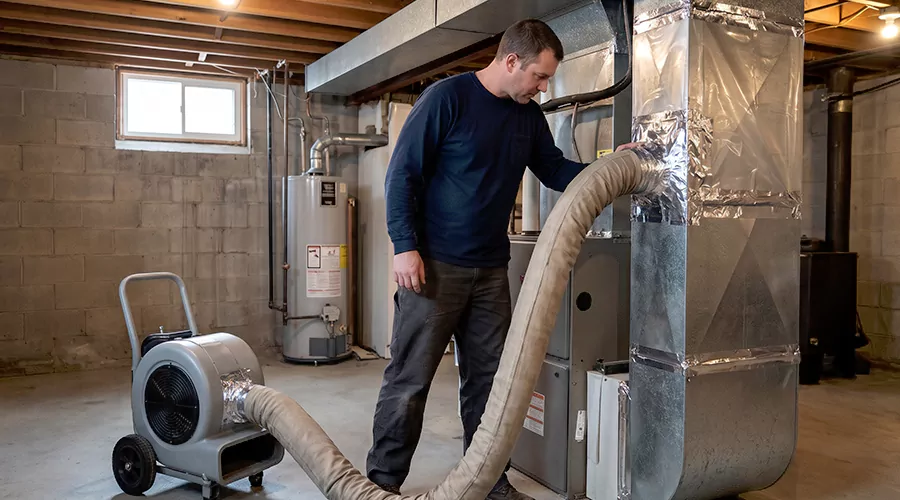
Aerosol air duct sealing works by injecting tiny adhesive particles into a pressurized HVAC duct system. As air escapes through cracks and gaps, it carries the particles toward those openings, where they accumulate along the edges and gradually seal the leaks. This method can repair many small, difficult-to-reach duct leaks without opening walls or ceilings. Air duct camera inspection can help technicians visually examine accessible duct interiors for visible damage, debris, and disconnected sections before selecting an appropriate repair method.
Air duct leakage is a common problem in residential heating and cooling systems. Conditioned air can escape through loose joints, small holes, and gaps before reaching occupied rooms. Return-side leaks may also draw unwanted air from attics, crawlspaces, and other spaces.
Traditional duct sealing involves applying mastic or approved metal tape directly to accessible joints. However, some leaks are hidden behind finished surfaces and cannot be reached easily. Aerosol duct sealing provides an alternative for suitable systems. Understanding the process, benefits, limitations, and costs can help homeowners decide whether it is appropriate for their ductwork.
What Is Aerosol Air Duct Sealing?
Aerosol air duct sealing is a professional method that seals small duct leaks from the inside. One well-known system is "Aeroseal', which uses specialized equipment to introduce an aerosolized sealant into the duct network.
Unlike ordinary spray coatings, the process is designed to deposit sealant primarily at leakage openings rather than coat the entire duct interior. The U.S. Department of Energy recognizes aerosol-based sealing as a method for improving duct airtightness, particularly when leaks are difficult to reach manually.
How Does Aerosol Duct Sealing Find Air Leaks?
The technology uses pressure differences to direct sealant toward openings. Technicians temporarily block the normal supply and return registers. A specialized fan then creates positive pressure inside the ducts.
Air tries to escape through gaps and cracks. When aerosol particles approach these openings, they collide with the edges and adhere to the surface. Additional particles collect until the opening is substantially sealed.
The equipment monitors leakage throughout the process, allowing the technician to track whether the treatment is reducing air loss.
How Is Aerosol Air Duct Sealing Performed?
Step 1. Inspect the HVAC System
The contractor examines accessible ducts, connections, and equipment. Large disconnected sections, severely damaged flexible ducts, or other major defects should be repaired before aerosol sealing begins. Aerosol particles cannot replace missing duct sections or restore crushed passages.
Step 2. Prepare and Protect the Equipment
Technicians temporarily isolate sensitive components, including the furnace, blower, cooling coil, and relevant sensors. Supply and return registers are covered to direct airflow through unintended openings. Proper preparation prevents sealant from entering equipment that should remain protected.
Step 3. Connect the Sealing Equipment
A specialized sealing machine is connected to the duct network through a suitable access point. This may involve using an existing opening or creating a temporary service opening that will be closed afterward.
Step 4. Measure Existing Leakage
The contractor pressurizes the ducts and performs an initial leakage measurement. This establishes a baseline for comparing conditions before and after treatment. Leakage is commonly reported as cubic feet per minute at 25 pascals, abbreviated CFM25.
Step 5. Inject the Aerosol Sealant
The machine introduces aerosolized sealing particles into the moving air. The particles travel through the ductwork and begin accumulating at small openings. The process is controlled to encourage deposition at leakage sites.
Step 6. Monitor the Sealing Progress
Computer-controlled equipment tracks leakage as the treatment continues. As openings become sealed, measured air leakage generally decreases. The technician monitors performance and determines when the treatment has reached the appropriate endpoint.
Step 7. Complete the Final Leakage Test
After sealing, the contractor measures leakage again. Comparing the initial and final results provides evidence of how much leakage was reduced.
Step 8. Restore the HVAC System
Temporary register covers are removed, access openings are properly closed, and protected equipment is restored. The contractor should verify normal HVAC operation and provide a sealing report.
What Types of Air Duct Leaks Can Aerosol Sealing Fix?
Aerosol sealing is particularly useful for small cracks, seams, and connection gaps that remain difficult to reach from outside the duct.
| Duct Problem | Is Aerosol Sealing Suitable? |
|---|---|
| Small leaking metal seams | Often suitable |
| Minor gaps at concealed connections | Often suitable |
| Numerous small distributed leaks | Often suitable |
| Large disconnected duct | Requires mechanical repair |
| Severely crushed flexible duct | Requires repair or replacement |
| Missing duct section | Requires replacement |
| Wet or contaminated insulation | Requires separate assessment |
| Undersized ductwork | Does not correct sizing |
The Department of Energy notes that injected aerosol sealing works well in combination with manual repairs to accessible problem areas.
The contractor should determine whether the duct material and condition are appropriate for the selected product.
What Are the Benefits of Aerosol Duct Sealing?
One advantage is the ability to reach leaks inside concealed ductwork. The technology may reduce the need to open finished walls or ceilings merely to seal numerous small gaps. It also provides measurable before-and-after leakage results.
When substantial duct leakage is reduced, more conditioned air may reach occupied rooms. This can improve comfort and reduce unnecessary heating or cooling losses. Professional attic air duct cleaning can help remove accumulated dust and debris from accessible attic ductwork when inspection shows that cleaning is needed.
However, energy savings depend on leak location, system condition, climate, and equipment operation. The treatment does not guarantee a specific utility-bill reduction.
Aerosol Duct Sealing vs. Traditional Duct Sealing
| Feature | Aerosol Sealing | Traditional Sealing |
|---|---|---|
| Application | Inside pressurized ducts | Outside accessible joints |
| Materials | Aerosolized adhesive sealant | Mastic or approved metal tape |
| Hidden small leaks | Often accessible through airflow | May require opening construction |
| Large openings | Usually require separate repair | Can be repaired mechanically |
| Leakage verification | Typically integrated into process | May require separate testing |
| Best application | Many small distributed leaks | Accessible joints and damaged connections |
Neither method is automatically superior for every property.
Accessible, disconnected joints often need mechanical repairs and manual sealing. Concealed networks with numerous small leaks may be better candidates for aerosol treatment.
How Much Does Aerosol Duct Sealing Cost?
Published 2026 estimates generally place aerosol sealing for one residential HVAC system around $1,500 to $3,500. Larger properties, multiple duct systems, difficult access, and required repairs can increase the price.
The written estimate should identify whether initial testing, final verification, equipment preparation, and additional manual repairs are included. Do not assume that aerosol treatment also includes duct cleaning, insulation, or replacement of damaged branches.
Is Aerosol Air Duct Sealing Safe?
Professional systems are designed to use sealing materials appropriate for the intended duct application. However, homeowners should ask the contractor for product information, applicable safety documentation, and the manufacturer's procedures for protecting equipment and occupied spaces.
Sensitive components should be isolated during treatment, and the system should be restored according to the specified procedures. Aerosol sealing should not be used as a substitute for removing hazardous material, correcting water damage, or repairing physically defective ducts.
How Long Does Aerosol Duct Sealing Take?
A residential project may take several hours, including equipment preparation, leakage testing, sealant application, and restoration. The duration depends on the duct system's size, existing leakage, accessibility, and the amount of preliminary repair work. A contractor should provide an appointment plan based on the specific property.
Is Aerosol Air Duct Sealing Worth It?
Aerosol sealing may be worthwhile when testing identifies substantial leakage and many openings are difficult to reach manually. It may be less economical when only a few accessible joints need sealing.
Ask the contractor to document the original leakage, explain the recommended method, and provide a final test report. The decision should be based on measured conditions and the cost of available repair options.
Conclusion
Aerosol air duct sealing uses pressurized airflow to carry adhesive particles toward cracks and gaps, sealing many small openings from inside the duct network. It is particularly useful when traditional sealing cannot easily reach concealed leaks. However, large disconnections, crushed ducts, and damaged insulation require separate repairs. Professional inspection and before-and-after leakage testing help determine whether the service is appropriate and whether it achieved the expected reduction in air loss.